
Retinal Disease
Macular Pucker
A macular pucker happens when wrinkles, creases or bulges form on your macula. The macula must lie flat against the back of your eye to work properly. When the macula wrinkles or bulges, your central vision is affected.
The macula is responsible for sharp central vision, including reading, recognizing faces, and seeing fine details.
Central Vision
Macular pucker can make straight lines or details appear distorted.
Some patients notice wavy vision, cloudy central vision, or difficulty seeing fine details.
Retina Imaging
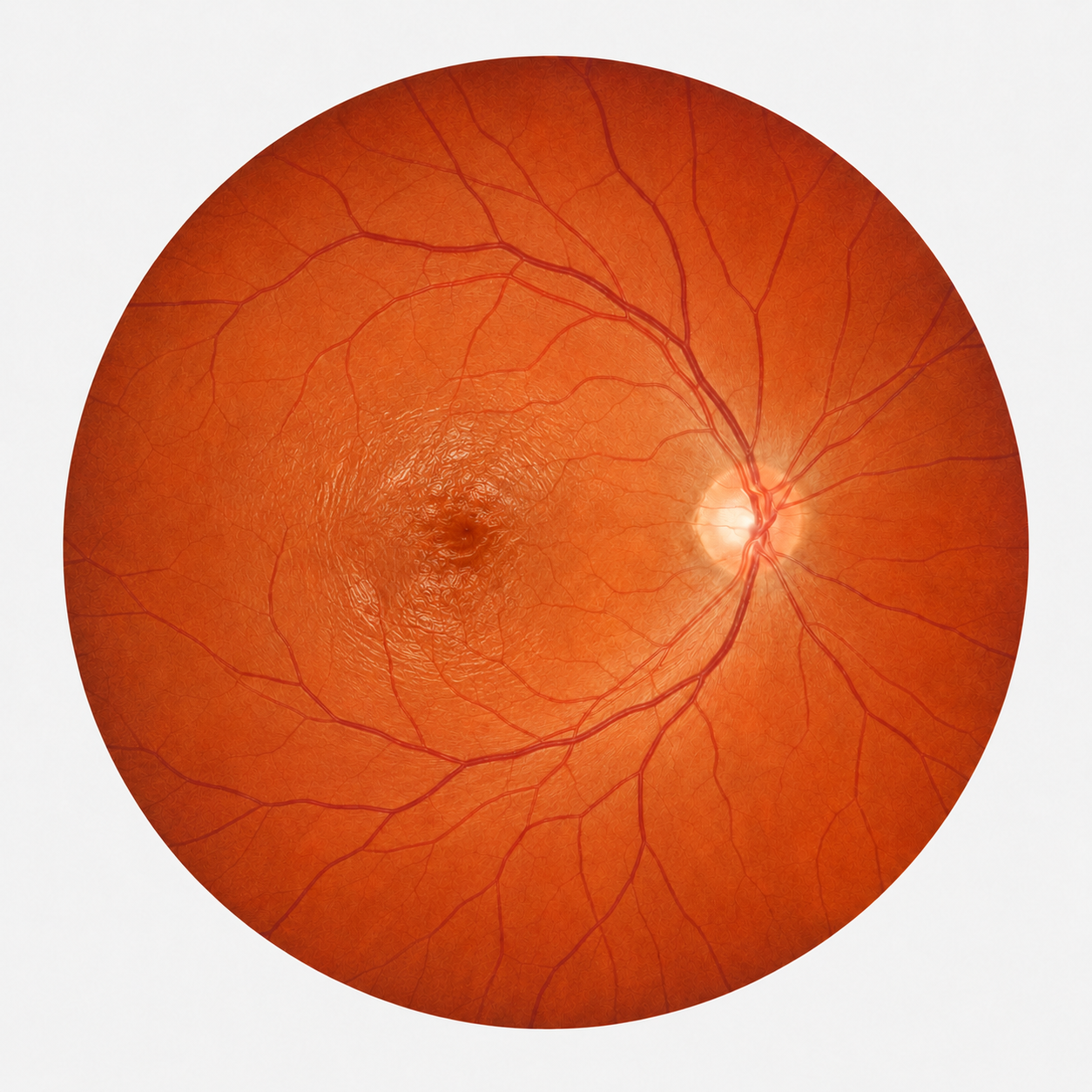
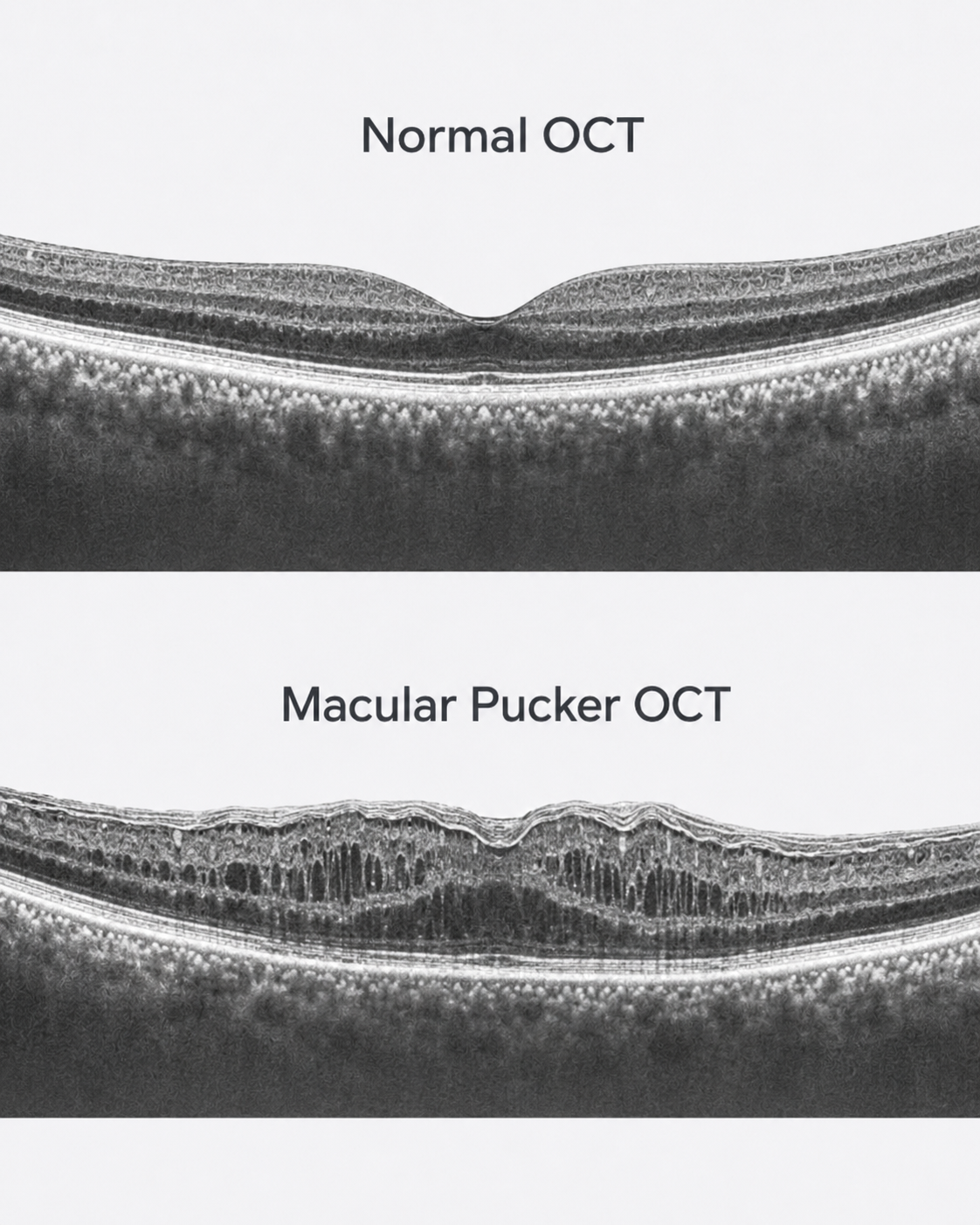
Macular Pucker Fundus Image and OCT
Fundus photography shows the surface of the retina, while OCT imaging shows a cross-section of the macula. Together, these images help show how a macular pucker can wrinkle or distort the macula.
Symptoms
Macular Pucker Symptoms
With macular pucker, objects can look wavy, or you may have trouble seeing details. You might notice a gray or cloudy area in your central vision. You may even have a blank spot in your central vision.
Causes
Macular Pucker Causes
Age is the most common cause of macular pucker. People who have other eye problems may also get a macular pucker. These problems include:
- Vitreous detachment, where the eye’s vitreous pulls away from the retina
- Torn or detached retina
- Swelling inside the eye
- Serious damage to the eye from surgery or injury
- Problems with blood vessels in the retina
What Happens
How Macular Pucker Affects Vision
A macular pucker is caused by scar tissue or membrane-like tissue on the surface of the macula. As this tissue contracts, it can wrinkle or pull on the macula, causing distortion or blurred central vision.
The amount of vision change can vary. Some patients have mild symptoms, while others notice more significant distortion or difficulty with daily tasks.
Macular pucker often changes central vision, not side vision.
If you notice new distortion, cloudy central vision, or a blank spot, a retinal exam can help determine whether macular pucker or another macular condition is present.
Treatment
Macular Pucker Treatments
If your symptoms are mild, you may not need any treatment. Instead, your ophthalmologist may change your glasses or contact lens prescription to improve your vision. If your symptoms are severe, your ophthalmologist may recommend a surgery called vitrectomy. Your ophthalmologist will remove some of the vitreous and scar tissue on your macula. It is likely your vision will slowly improve; however, your sight may never be as good as it was before the macular pucker developed.
Macular Pucker Evaluation and Treatment
If you notice wavy vision, blurred central vision, a gray or cloudy area, or trouble seeing details, a retina specialist can evaluate the macula and determine whether symptoms are related to a macular pucker or another retinal condition.
Schedule an Appointment
Call to schedule an appointment today.
Our retina specialists provide evaluation and treatment for macular pucker and other diseases affecting the retina, macula, and vitreous.