
Retinal Disease
Macular Hole
A macular hole is when a tear or hole forms in your macula.
The macula is the part of the retina responsible for sharp central vision. When a hole forms in this area, patients may notice changes with reading, recognizing faces, seeing fine detail, or looking directly at objects.
Central Vision
Macular holes affect the center of vision.
Macular hole generally doesn’t affect peripheral vision, so side vision is often unaffected.
Retina Imaging
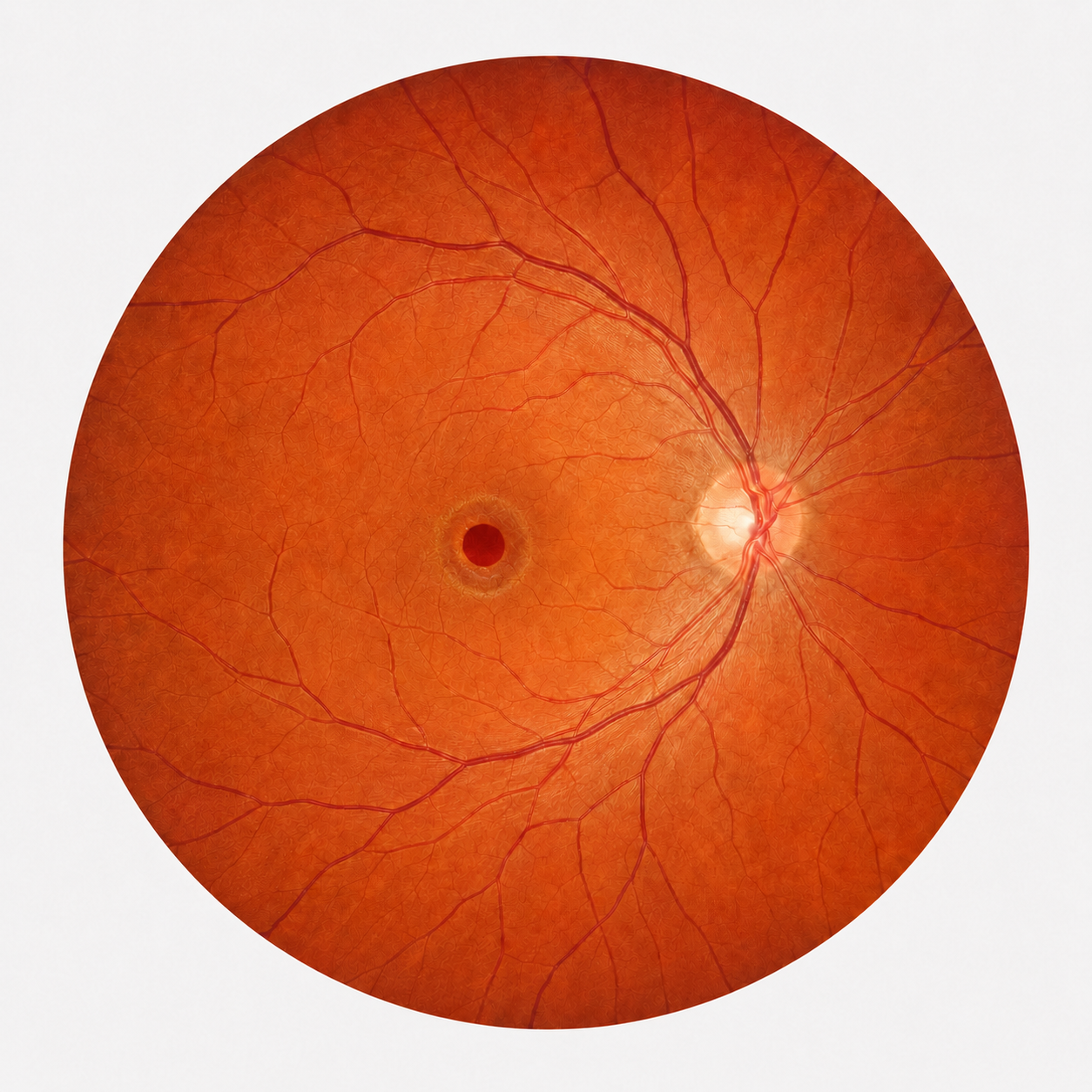
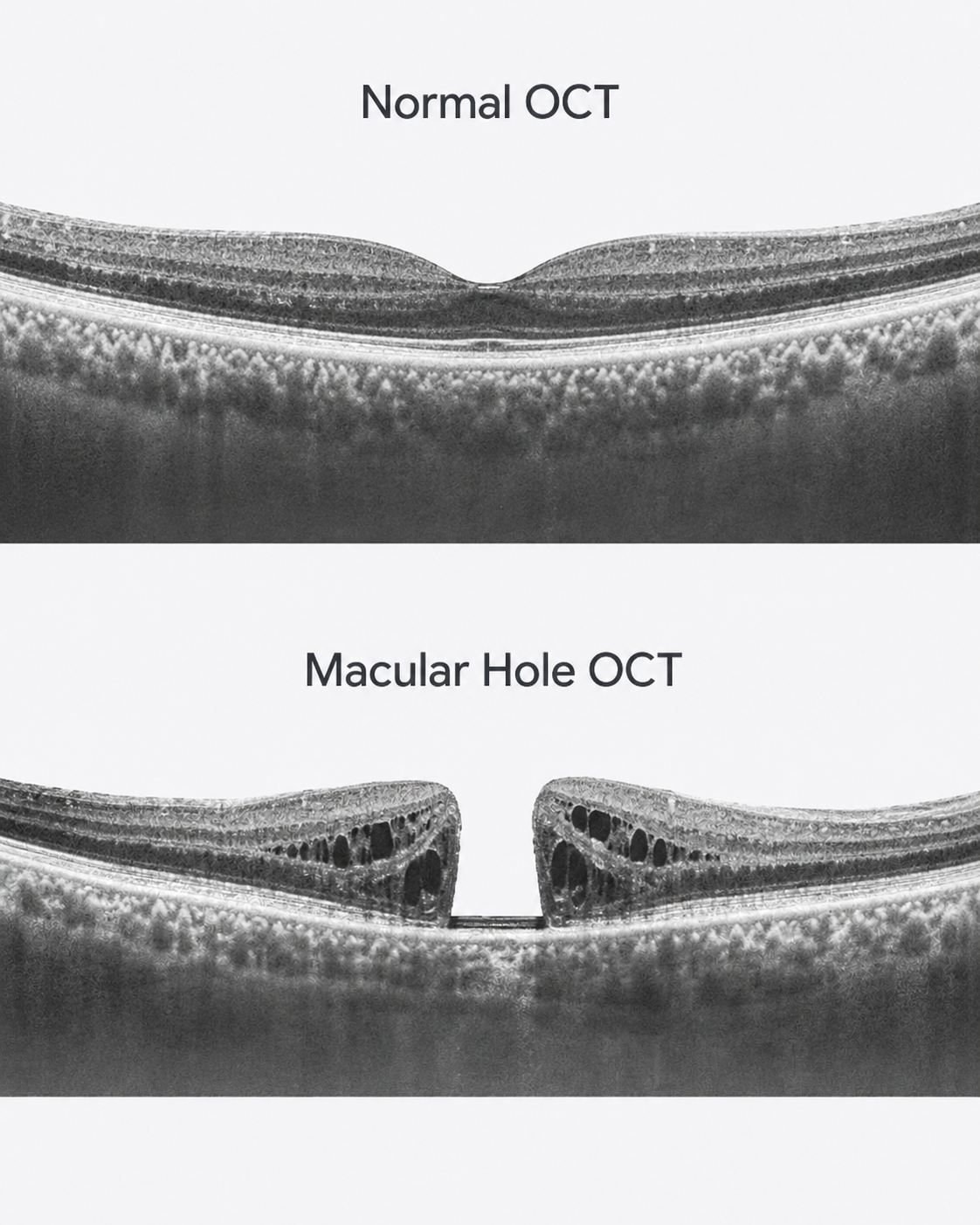
Macular Hole Visualization
Fundus photography shows the surface of the retina, while OCT imaging shows a cross-section of the macula. Together, these images help demonstrate how a macular hole affects central vision.
Symptoms
Macular Hole Symptoms
Macular hole symptoms are similar to those of macular degeneration. The most common symptom of a macular hole is a decline in the central vision of the affected eye. Macular hole generally doesn’t affect peripheral vision, so that will be unaffected.
Additional symptoms of macular hole include:
Causes
Macular Hole Causes
Age is the most common cause of macular hole. As you get older, the vitreous begins to shrink and pull away from the retina. Usually the vitreous pulls away with no problems, but sometimes the vitreous can stick to the retina. This causes the macula to stretch and a hole to form.
Other times a macular hole can form when the macula swells from other eye diseases, or it can be caused by an eye injury.
Diagnosis
How Macular Holes Are Evaluated
A retina specialist can evaluate the macula during a dilated retinal exam. OCT imaging is commonly used to show the retinal layers and confirm whether a full-thickness macular hole is present.
The size and stage of the hole help guide treatment recommendations.
Central vision changes should be evaluated.
Distortion, blurring, or a dark spot in the central vision can be signs of a macular problem and should be examined by an eye care specialist.
Treatment
Macular Hole Treatments
Surgery called vitrectomy is the best way to treat a macular hole. Your ophthalmologist removes the vitreous that is pulling on your macula. Then he or she puts a gas bubble inside the eye. This bubble helps flatten the macular hole and hold it in place while your eye heals. The gas bubble slowly goes away on its own.
Macular Hole Evaluation and Treatment
If you notice distortion, blurring, or a dark spot in your central vision, it is important to schedule an eye examination. A retina specialist can determine whether symptoms are related to a macular hole or another retinal condition.
Schedule an Appointment
Call to schedule an appointment today.
Our retina specialists provide evaluation and treatment for macular holes and other diseases affecting the retina, macula, and vitreous.